Prince William County Clerk of Court serves as the main county court clerk office responsible for maintaining official legal records in the county judicial system. The office works closely with courts such as the Prince William County Circuit Court and the Prince William County General District Court. Staff members record case filings, preserve court documents, and maintain legal records created during hearings and trials. These documents form the county’s permanent legal archive. Courts, attorneys, residents, and researchers rely on this judicial records office for accurate documentation, organized case files, and reliable public legal record services.
Prince William County Clerk of Court provides important public legal services through its role as a court administration office. The office manages civil case filings, criminal records, probate matters, marriage licenses, and land document filings. Many residents contact the clerk’s office for certified copies of court documents or confirmation of case information. Attorneys submit motions, petitions, and legal paperwork through this office during active court proceedings. Researchers review historical case files preserved within the county record system. Organized recordkeeping helps maintain transparency and trust within the judicial system and supports efficient court operations across Prince William County.
What Does the Prince William County Court Clerk Do?
The prince william county court clerk manages official court records, legal filings, and administrative work that supports daily court operations. This office maintains accurate documentation for legal proceedings and provides record services for residents, attorneys, and government agencies. Staff members at the Prince William County Court work closely with the Circuit Court and other courts within the county system. Staff members maintain court files, record legal actions, and organize documents created during hearings and trials. Through careful official record keeping, the office preserves permanent court records and supports transparency in the judicial process.
Core Responsibilities of the Clerk’s Office
The prince william county court clerk serves as the custodian of official court documents. Every filing submitted in court becomes part of the legal record maintained by the clerk’s office. Judges and court staff rely on these records during hearings, case reviews, and final decisions. Organized files help the court system operate smoothly and maintain accurate documentation for every case. Reliable records help preserve the history of legal proceedings within Prince William County.
- Maintaining official court records for civil, criminal, and probate cases
- Supporting judges during court proceedings through organized documentation
- Preserving permanent legal records for county archives
- Managing court files and case documentation within the judicial system
- Promoting transparency by maintaining clear public court records
Main Services Provided
The prince william county court clerk office offers several legal document services that support both court operations and public record needs. Residents often request documents for legal matters, property transactions, or personal records. Attorneys rely on the clerk’s office for filing case documents and maintaining official court paperwork. Organized document processing keeps court records accurate and easy to retrieve when needed. These services form an important part of local court administration.
Important services include:
- Court document filing for lawsuits, motions, and legal petitions
- Document processing and record keeping for court cases
- Issuing certified copies of court records and legal documents
- Managing court dockets that list scheduled hearings and cases
- Handling administrative functions within the court administration system
Current Prince William County Clerk of Court
The Prince William County Clerk of Court is currently Jacqueline C. Smith who serves as the elected Clerk for the Prince William County Circuit Court. This position is a constitutional office in Virginia with an eight-year elected term. The clerk manages official court records, legal filings, and administrative operations that support the county judicial system. The office serves residents and legal professionals across Prince William County, the City of Manassas, and the City of Manassas Park while maintaining permanent legal documentation for the circuit court.
Duties and Responsibilities
The Prince William County Clerk of Court oversees daily court administration and preserves the official records created during court proceedings. This role supports judges, attorneys, and the public by maintaining organized legal documentation and court filings. Accurate recordkeeping helps maintain transparency within the local judicial system. The Circuit Court Clerk’s Office operates at Prince William County Circuit Court Clerk’s Office. Multiple departments within the office handle specialized services such as civil records, criminal filings, land records, probate cases, and marriage licenses. These services support residents, attorneys, researchers, and government agencies seeking verified legal records within Prince William County.
Main responsibilities include:
- Managing civil and criminal court records for the circuit court
- Issuing marriage licenses and maintaining related records
- Recording land deeds and property documents in county land records
- Preparing court orders, judgments, and legal filings issued by judges
- Maintaining jury lists and supporting jury selection processes
- Handling probate matters, including wills and estate filings
How to Search Prince William County Court Records
A Prince William County court records search allows users to view case information filed in the Prince William County Circuit Court. The court uses the Virginia judiciary’s online case management system where the Clerk of Court records civil and criminal case information. This system shows details such as case numbers, party names, charges, and hearing dates for public court records. Users can search cases from home using the official Virginia court portal. The search system requires selecting a specific court and then searching by name, case number, or hearing date.
Official court records search tool URL: https://eapps.courts.state.va.us/CJISWeb/circuit.jsp
Online Court Records Search
Follow these steps to search Prince William County court records using the official Virginia Circuit Court system.
Open the official court search website
This opens the Virginia Circuit Court Case Information System, which is used by most circuit courts across the state. Type or paste this link into your browser.
Official page: https://eapps.courts.state.va.us/CJISWeb/circuit.jsp
Read and accept the disclaimer
- The system displays a legal notice explaining that the information is public court data.
- Scroll down and click “Accept” or “Continue.”
Select the court
- A list of Virginia circuit courts will appear.
- Choose: Prince William County Circuit
- Click “Begin” to enter the search page.
Choose the division
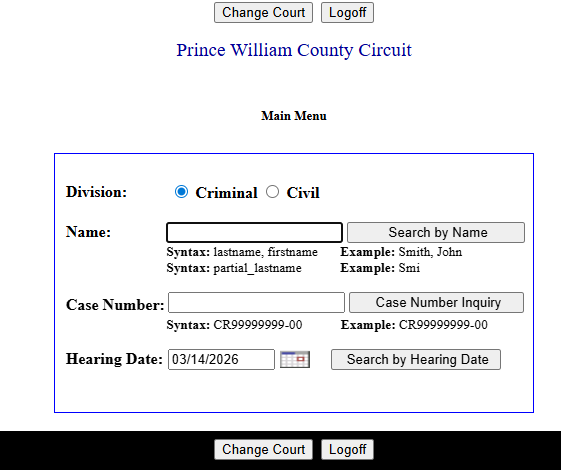
The next screen shows the main menu where users select the type of case:
- Criminal: criminal charges and prosecutions
- Civil: lawsuits, property disputes, contracts, divorces, and other civil matters
- Select the division that matches the case type.
Choose the search method
The system allows three search methods:
- Name Search
- Case Number Search
- Hearing Date Search
- Choose the method based on the information you have.
Enter search information
Enter details in the search fields.
| Field | What to Enter |
|---|---|
| Name | Last name, first name (Example: Smith, John) |
| Case Number | Exact case ID (Example: CR99999999-00) |
| Hearing Date | Date of court hearing |
Click the search button
Select:
- Search by Name
- Case Number Inquiry
- Search by Hearing Date
The system will generate results that match your search criteria.
Review search results
The results page typically displays:
- Case number
- Party names
- Case type
- Filing date
- Hearing date
- Court division
Open the case details
Click the case number link to view detailed information about the case. The case details page may include:
- Charges or case type
- Hearing schedule
- Case status
- Court actions and filings
Log out when finished
- Click Logoff at the top or bottom of the page after completing your search.
- The system will automatically return to the starting page if the session becomes inactive.
Search by Case Number
A case number search is the fastest and most accurate way to locate court records. Case numbers are unique, so this method usually returns a single record with the exact case information. Steps:
- Open the court records search page
- Select Case Number search
- Enter the full case ID
- Click Case Number Inquiry
Search by Name
A name search helps when the case number is not available. This search may show multiple results if the name is common. Users can review the results list to identify the correct case.
Steps:
- Select the Name search field
- Enter the last name first
- Add the first name if known
- Click Search by Name
In-Person Record Search at the Clerk’s Office
Residents can search public court records Prince William County in person at the courthouse using public computer terminals maintained by the clerk’s office. Prince William County Circuit Court Clerk’s Office The courthouse provides computers in the civil and criminal divisions where visitors can perform case searches. The clerk’s office uses the same online case management system to answer public questions about court cases. Court staff can help with navigation of the system. Staff members cannot provide legal advice. Certified copies of court documents may require a formal request through the clerk’s office.
Types of Records Available Through the Clerk
The Prince William County Clerk of Court maintains a wide range of documents through its system of official record keeping. These records form part of the county’s legal archive and document the actions taken in court proceedings, property transactions, and estate matters. Many of these files originate from proceedings in the Prince William County Circuit Court and remain preserved as part of the county’s legal archives. Residents, attorneys, and researchers review these records for legal verification, historical research, or property documentation. The clerk’s office organizes these records into several categories that reflect different types of court activity.
Civil Court Records
Civil court records contain documents created during lawsuits and other non-criminal legal disputes. These files record the legal process between parties involved in civil cases handled by the circuit court. The court docket maintained by the clerk records each action and filing in these cases. The clerk’s office stores these records as part of permanent public case files within the court system. Attorneys, property owners, and residents often review civil filings to verify court decisions or legal claims. These records remain part of the official court archive maintained by the clerk’s office.
- Civil complaints and legal petitions
- Motions filed by attorneys or parties
- Court orders and judgments
- Divorce and family court filings
- Contract disputes and financial claims
Criminal Case Records
Criminal case records document prosecutions and criminal charges processed by the court. These records include filings submitted by prosecutors, defense attorneys, and the court during criminal proceedings. The clerk preserves these documents to maintain transparency in the justice system. Public criminal records help track case activity from the initial charge through sentencing or final court action. These records form part of the county’s official criminal case archive.
- Indictments and criminal charges
- Court hearing schedules
- Trial records and court rulings
- Sentencing documents
- Appeal filings within the circuit court
Probate & Estate Records
Probate records relate to estate administration after a person’s death. These estate records document how property, assets, and legal responsibilities transfer to heirs or appointed administrators. The clerk records probate filings and court decisions connected with estate matters. Families and attorneys frequently review these records during estate settlement or inheritance proceedings. Probate records remain preserved within the county’s permanent court archive.
- Wills submitted for probate
- Estate administration filings
- Appointment of executors or administrators
- Estate inventories and accounting records
- Probate court orders
Land Records & Property Documents
Land records document ownership and transfer of real estate within the county. These files serve as the official registry for property deeds and other legal property documents. Buyers, lenders, and attorneys review these records during property transactions. Accurate land records help confirm ownership history and property rights. The clerk’s office preserves these documents as part of the county’s public property record system.
- Property deeds and title transfers
- Mortgage documents
- Property liens and releases
- Easements and land agreements
- Real estate settlement documents
Marriage Licenses & Other Legal Documents
The clerk’s office maintains records related to marriage licenses and other legal certifications filed with the court. These documents serve as official proof of legal events recorded by the county court system. Couples obtain marriage licenses through the circuit court clerk’s office. Researchers and residents sometimes review these records for historical or legal verification. These documents remain part of the county’s long-term legal documentation system.
- Marriage license applications and issued licenses
- Marriage record certificates
- Notary public commissions
- Business or legal certifications filed with the court
How to File Documents with the Clerk of Court
Court document filing allows parties in a legal case to submit official paperwork that becomes part of the court record. The Prince William County Clerk of Court manages these filings for matters handled by the Prince William County Circuit Court. Attorneys, businesses, and residents submit documents during civil cases, criminal proceedings, probate matters, and property filings. Every document filed with the clerk becomes part of the permanent legal record maintained by the court. Accurate filing helps judges review case information, maintain organized court files, and track legal actions within the county judicial system. Filings may include motions, petitions, affidavits, legal notices, and other official documents related to court proceedings.
Filing Requirements
Before submitting documents, filers must follow the standard rules set by the circuit court. These requirements help maintain organized records and proper case documentation within the clerk’s office. Documents must meet specific formatting and submission requirements before they enter the court system. Filers typically provide case details, party names, and supporting documents required for the legal matter. Proper formatting allows the clerk’s office to process documents quickly and record them in the court database.
Common filing requirements include:
- Correct case number listed on each document
- Full names of all parties involved in the case
- Proper document formatting and signatures
- Required filing fees for certain case types
- Supporting legal documents when required by the court
Filing Methods
The Prince William County Clerk of Court accepts several filing methods depending on the case type and court procedures. Filers may submit documents directly to the clerk’s office or use approved submission channels.
Common filing methods include:
- In Person
- Online
- By Mail
- In-person filing: allows individuals or attorneys to submit documents directly at the courthouse. Court staff can review documents for basic procedural requirements before accepting them for processing.
- Online filing: may be available for certain case types through the Virginia judiciary electronic filing system used by courts across the state. Attorneys frequently use this method to submit filings electronically.
- Mail filing: allows documents to be sent to the clerk’s office through postal delivery. Filers include the required forms, payment for filing fees when necessary, and any supporting documents needed for the case. Once received, the clerk’s office processes the documents and records them in the official court record system.
Fees, Payments, and Accepted Methods
The Prince William County Clerk of Court collects fees for services related to court document filing, record copies, and certified legal documents. These charges support administrative operations of the Prince William County Circuit Court and the processing of official court records. Fees vary based on the type of request, document length, or service required. Residents, attorneys, and businesses often pay these charges when submitting filings or requesting official copies from the clerk’s office. Each payment becomes part of the court’s financial record and supports the management of legal documents maintained by the clerk.
Filing Fees
Filing fees apply when legal documents enter the court system. These charges cover document processing, case registration, and record management performed by the clerk’s office. Common situations that require filing fees include:
- Civil case filings
- Divorce petitions
- Probate case filings
- Business or legal petitions submitted to the court
| Filing Type | Typical Purpose | Fee Range (Approx.) |
|---|---|---|
| Civil Case Filing | Starting a lawsuit or civil complaint | $80 – $100 |
| Divorce Filing | Petition for divorce proceedings | $80 – $90 |
| Probate Filing | Estate administration and wills | $50 – $70 |
| Business / Legal Petition | Corporate or legal filings submitted to court | $30 – $60 |
Copy Costs
The clerk’s office provides copies of court records for residents, attorneys, and researchers. These copies may include court filings, judgments, and legal documentation maintained in official court records. Common requests include:
- Case file copies
- Court orders and judgments
- Probate documents
- Property record documents
| Copy Service | Description | Typical Fee |
|---|---|---|
| Standard Copy | Photocopy of court document page | $0.50 per page |
| Digital Copy | Electronic record copy | Varies by request |
| Large Record Request | Multi-page case file copies | Based on total pages |
Certification Charges
Certified copies contain the official seal from the clerk confirming the document as an authentic court record. Many legal situations require certified documents rather than standard copies. Certified copies may be requested for:
- Court judgments
- Divorce decrees
- Probate documents
- Property filings recorded by the court
| Certification Type | Purpose | Typical Fee |
|---|---|---|
| Certified Copy | Official certified court record | $2 – $5 per document |
| Exemplified Record | Court certified legal record used in other courts | $5 – $10 |
Payment Options
The Prince William County Clerk of Court accepts several payment methods for filing fees and record requests. Payment methods depend on the type of request and the filing method used. Common payment options include:
- Cash payments at the courthouse
- Credit or debit cards
- Money orders
- Certified checks
| Payment Method | Where Accepted |
|---|---|
| Cash | In-person courthouse payments |
| Credit / Debit Card | Clerk service counters |
| Money Order | Mail or in-person filings |
| Certified Check | Mail or in-person filings |
Location and Contact Information
The Prince William County Clerk of Court office is located inside the Prince William County Judicial Center in Manassas, Virginia. This office handles court record services, document filings, probate matters, land records, and marriage licenses for cases heard in the Prince William County Circuit Court. The clerk’s office operates on the third floor of the courthouse building.
Official Address
9311 Lee Ave, 3rd Floor
Manassas, VA 20110, United States
Contact Details
| Type | Information |
|---|---|
| Main Phone | (703) 792-6015 |
| Civil Division | (703) 792-6029 |
| Criminal Division | (703) 792-6031 |
| Land Records | (703) 792-6035 |
| circuitcourt@pwcgov.org | |
| Fax | (703) 342-0342 |
Office Hours
Court payments are usually accepted until 4:30 PM on business days
| Day | Hours |
|---|---|
| Monday – Friday | 8:30 AM – 5:00 PM |
| Weekends | Closed |
Frequently Asked Questions
The Prince William County Clerk of Court handles record management, document filings, and administrative services for cases processed by the Prince William County Circuit Court. Residents, attorneys, and researchers often have questions about how court records work and how to request services through the clerk’s office. Public court information helps people review legal case activity, confirm court filings, and locate official documents recorded by the court system. Many services relate to record searches, document requests, and legal filings processed through the clerk’s office. The following questions explain common services provided by the clerk and how residents interact with the court record system in Prince William County.
What does the Clerk of Court do?
The Clerk of Court manages administrative operations and official records for the circuit court. The office records legal filings, preserves court documents, and maintains case files created during civil, criminal, and probate proceedings. Staff members organize court records, prepare court orders, and maintain documentation related to hearings and trials. The clerk’s office also manages land records, marriage licenses, and probate filings. These responsibilities help maintain accurate legal documentation for the county court system and support daily court operations within the judicial system.
Are court records public?
Many court records in Prince William County remain available for public review. Civil cases, criminal proceedings, probate filings, and property documents often appear in public court records maintained by the clerk’s office. These records help maintain transparency within the legal system. Some records contain sensitive information and may have restrictions based on Virginia law or court orders. Juvenile cases and sealed documents often remain restricted. The clerk’s office maintains these records and provides copies or record searches when the information qualifies for public release.
How do I file documents with the court?
Court documents are submitted through the clerk’s office for cases handled by the circuit court. Filers prepare legal paperwork such as motions, petitions, affidavits, and supporting documents required for a case. These documents may be delivered directly at the courthouse, mailed to the clerk’s office, or submitted through approved electronic filing systems when available. The clerk reviews documents for basic filing requirements and records them in the official court record system. Once accepted, the filing becomes part of the permanent case file maintained by the court.
Can I search Prince William County court records online?
Yes, court records may be searched online using the Virginia Circuit Court case information system. This system allows users to review case information recorded by the clerk’s office. Searches may be performed using a case number, party name, or hearing date depending on the information available. Search results usually show case numbers, filing dates, court divisions, and hearing schedules. Online systems display basic case information, while certified copies or full court documents often require a request through the clerk’s office.
Where is the Clerk of Court office located?
The clerk’s office operates within the courthouse building used by the Prince William County Circuit Court. The office serves residents of Prince William County and nearby cities including Manassas and Manassas Park. Visitors often travel to the courthouse to file legal documents, request record copies, or obtain marriage licenses. The office maintains departments responsible for civil filings, criminal records, land records, and probate services. Court staff assist visitors with record requests and filing procedures during regular courthouse business hours.