
Prince William County Court Calendar provides an organized schedule of upcoming court sessions and hearings, allowing citizens, attorneys, and legal researchers to plan effectively. By referencing the court hearing schedule in Prince William County, individuals can track deadlines, prepare necessary documents, and attend hearings on time. This legal calendar system covers civil, criminal, family, and probate cases, helping users manage multiple responsibilities efficiently. Having access to these scheduled dates reduces missed appearances, ensures compliance with legal requirements, and allows lawyers and litigants to coordinate effectively.
The county’s judicial calendar lists various session types, including civil litigation, criminal trials, family law hearings, and motions related to probate or guardianship. Users can quickly look up court dates by case number or party name, which simplifies case preparation and attendance planning. By consulting this calendar, attorneys, plaintiffs, and defendants can avoid delays and last-minute confusion. For more detailed case information, users can visit the Prince William County Court Records page, which complements the court calendar and provides complete context for ongoing legal proceedings.
What Are the Prince William County Court Calendar
The court schedule provides a structured view of all upcoming court sessions, helping residents, attorneys, and researchers plan for legal proceedings. This judicial schedule lists hearings across civil, criminal, family, probate, and traffic cases, offering a centralized reference for managing case timelines. By consulting the calendar at Prince William County Court individuals can avoid missed hearings, prepare documentation, and coordinate with legal representatives efficiently. The daily court agenda helps participants understand which sessions are being held and which judges or magistrates are presiding over each case.
How the Court Calendar Is Organized Across Courts
Understanding the differences between court levels is essential when reviewing the Prince William County judicial calendar. Each court maintains its own docket schedule and session timetable, which helps manage hearings efficiently throughout the week. The Prince William County Circuit Court generally handles serious civil disputes, felony criminal cases, and appeals from lower courts. The Prince William County General District Court focuses on traffic violations, misdemeanor offenses, and certain civil matters involving smaller claims.
Another important court within the system is the Prince William County Juvenile and Domestic Relations District Court, which manages family-related proceedings involving custody, support, and juvenile cases. Magistrate offices operate alongside these courts and address urgent legal requests such as warrants, emergency protective orders, or initial detention decisions. Each court maintains its own session calendar, yet the Prince William County court schedule brings these listings together for easier public reference. This combined calendar helps residents, attorneys, and researchers identify when hearings will take place, which courtroom is assigned, and which judge may preside over the session. By organizing schedules across multiple courts, the system provides a clear court sessions overview that simplifies tracking of hearings throughout the county’s judicial system.
Benefits of Checking the Judicial Schedule
The calendar is updated daily by court staff to reflect new filings, changes in hearing dates, and adjustments made by judges. Regular updates ensure accuracy and help participants avoid conflicts. Checking the schedule in advance offers multiple benefits: it allows attorneys to prepare arguments, ensures witnesses are available, and helps parties avoid rescheduling fees or penalties. Researchers and journalists can also track trends in legal activity by reviewing patterns across different court sessions.
A visual diagram or infographic can help users understand the hierarchy of court schedules. For example, it could illustrate how civil and criminal hearings flow through the Circuit, District, and Magistrate Courts, highlighting where each session type typically occurs. This visual guide makes it easier for users to locate the right court and date for their specific case. By relying on the Prince William County Court Schedule, residents and legal professionals can maintain organization, reduce delays, and participate effectively in the legal process. The judicial schedule serves as a reliable, user-friendly resource for anyone involved in civil, criminal, or family matters.
How to Search Hearings in the Prince William County Court Calendar
The Prince William County court schedule allows users to check upcoming hearings and verify court session times through the official case information portal. Using the court date lookup tool, attorneys, litigants, and researchers can confirm hearing dates, courtroom assignments, and judge schedules for cases filed in the Prince William County Circuit Court. The hearing search system is maintained by the Supreme Court of Virginia through the Circuit Court Case Information platform. By following the steps below, users can review the daily court agenda and identify scheduled civil and criminal hearings within the county court system.
Open the Official Hearing Search Portal
- Start by visiting the official Virginia Circuit Court case information page. Official URL: https://eapps.courts.state.va.us/CJISWeb/circuit.jsp
- Opening this portal is the first step in locating hearing schedules for Prince William County cases. This portal provides an online court calendar interface where users can:
- Perform a court docket search
- Check scheduled hearings
- Verify courtroom locations
- Confirm judge assignments
- Review public access court records
Select Prince William County Circuit Court
After the page loads, the system will ask you to select the court you want to search.
- Locate the Court selection dropdown menu.
- Scroll through the list of Virginia circuit courts.
- Select Prince William County Circuit Court.
- Click Begin to continue.
Choose the Appropriate Case Division
The next screen will ask you to select a division of the court. This helps filter hearings by case type. Choose the division that matches the case you want to track. This step narrows the results so the daily court agenda shows relevant hearings. Typical divisions include:
- Civil Division: contract disputes, personal injury cases, property matters, and other lawsuits.
- Criminal Division: felony cases, indictments, and major criminal proceedings.
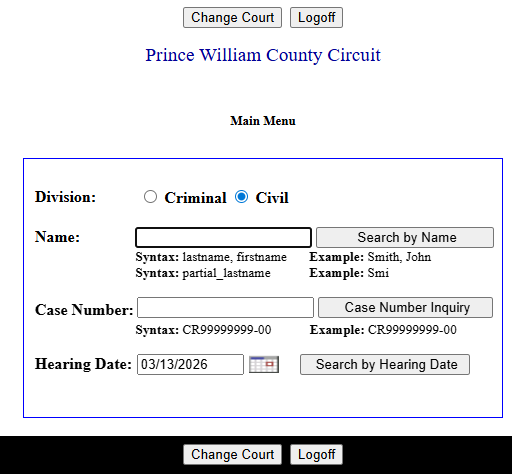
Use the Hearing Date Search
To focus on the court calendar, use the hearing date search option. Follow these steps carefully:
- Locate the Hearing Date field on the search page.
- Click the calendar icon next to the field.
- Select the specific date of the hearing you want to review.
- Submit the search request.
Review the Daily Court Agenda
After submitting the hearing date search, the system displays a results table containing scheduled hearings. Typical information shown includes:
| Field | What It Shows |
|---|---|
| Case Number | Official case identifier |
| Party Names | Individuals or organizations involved |
| Hearing Date | Scheduled hearing date |
| Time | Exact court session time |
| Courtroom | Assigned courtroom |
| Judge | Presiding judge |
Open the Case Record for Detailed Hearing Information
To see more information about a specific hearing:
- Click the Case Number in the results list.
- The system opens the case details page.
Inside the case record you can view:
- Upcoming hearing dates
- Previous hearings and outcomes
- Filed motions and court orders
- Assigned judge information
- Case status updates
Types of Court Hearings and Sessions
The court hearing schedule Prince William County lists many hearing types that appear across local courts during the judicial week. These entries create a structured docket schedule that helps attorneys, litigants, and observers track trial dates and upcoming proceedings. By reviewing the court sessions overview, users can see how different hearings are arranged throughout the calendar. This case hearing timetable shows when disputes, criminal charges, or administrative matters will be heard, making it easier for participants to prepare and attend the correct court session.
Civil vs. Criminal Hearings
Civil and criminal hearings appear frequently within the court hearing schedule in Prince William County. Civil proceedings involve disputes between private parties, including contract conflicts, property disagreements, and personal injury claims. These hearings often involve pre-trial motions, settlement discussions, and scheduled trial dates traffic court hearings which address violations such as speeding, reckless driving, or other motor vehicle offenses, are also scheduled and handled separately within the docket. Criminal hearings address alleged violations of state law and may include arraignments, bail reviews, and sentencing sessions. Reviewing these entries within the docket schedule helps parties understand what type of hearing is scheduled and how the case will progress.
- Civil motion hearings
- Pre-trial conferences
- Criminal arraignments
- Sentencing hearings
- Jury or bench trials
Family and Probate Court Sessions
Family and probate matters appear regularly within the court sessions overview, focusing on domestic and estate-related legal issues. Family hearings often address sensitive matters involving parents, children, or guardians. Probate sessions typically deal with estate management and legal questions related to wills. These hearings require careful scheduling because multiple parties may need to attend and present documentation. Checking the case hearing timetable allows participants to confirm their hearing dates and prepare necessary legal materials before appearing in court.
- Child custody and visitation hearings
- Child support modification sessions
- Protective order hearings
- Estate administration hearings
- Guardianship or conservatorship reviews
Traffic and Misdemeanor Court Dates
Traffic violations and misdemeanor cases appear often within the daily docket schedule, with courts scheduling many hearings during the same session. These matters usually involve minor criminal charges or driving-related offenses. Courts frequently assign short time slots so multiple cases can be heard throughout the day. Reviewing the court hearing schedule Prince William County helps drivers, defendants, and attorneys confirm their assigned hearing times and avoid missing court appearances.
- Traffic citation hearings
- Driving offense cases
- Minor criminal misdemeanors
- Small claims disputes
- License violation hearings
Special Court Sessions
Special court sessions appear periodically within the court sessions overview and address unique procedural stages in the legal process. These sessions may occur less frequently than standard hearings but play an important role in preparing cases for trial or addressing urgent legal matters. They are usually scheduled separately within the case hearing timetable and may involve multiple participants or extended courtroom proceedings.
- Grand jury proceedings reviewing evidence before charges
- Jury selection sessions before a trial begins
- Emergency hearings addressing urgent legal requests
- Special docket sessions focusing on particular motions or case categories
Historical Court Calendar and Archive Access
The Prince William County court schedule contains both current hearing listings and records of past proceedings maintained by courts within the county judicial system. These archived entries allow users to perform a court date lookup for earlier hearings and examine how a case moved through the docket. By reviewing these records, attorneys and researchers can conduct a case timeline review that shows the order of hearings, motions, and trial dates. Archived calendars create a historical reference point that helps users track developments across civil, criminal, family, and other court matters.
Availability of Archived Court Calendars
Archived court calendars preserve earlier docket schedules once hearings have already taken place. These records typically include the same core details found in active calendars, such as hearing dates, case numbers, and courtroom assignments. Many courts maintain these archives through digital case information systems or records maintained by the clerk’s office. Reviewing archived court calendars allows users to verify earlier court sessions and confirm when important procedural steps occurred.
- Past hearing dates and courtroom schedules
- Case numbers connected to earlier proceedings
- Judge or magistrate assignments
- Records showing completed court sessions
Using Historical Calendars for Research and Case Preparation
Legal professionals frequently consult archived calendars when preparing cases or reviewing prior proceedings. Attorneys may study earlier hearings to understand how motions were handled or when procedural changes occurred. Paralegals often rely on historical docket data to compile summaries that show how a case progressed through the court. Academic researchers and legal analysts may review these records to observe trends in case processing or scheduling patterns. Conducting a case timeline review through historical calendars helps clarify how a dispute developed over time and how court actions shaped the final outcome.
- Tracking motion hearings and trial scheduling
- Confirming continuances or rescheduled hearings
- Reviewing procedural history before filing motions
- Studying long-term trends in court activity
Case Prioritization and Court Docket Organization
The court docket schedule plays an important role in organizing hearings within the court hearing schedule Prince William County. Courts must manage many cases each day, so they follow a structured process that determines when each hearing appears on the calendar. This process forms part of the court’s judicial workflow, allowing judges and court staff to balance urgent matters, scheduled trials, and routine hearings. By reviewing the docket schedule, participants can better understand why some cases appear earlier on the calendar while others are listed later in the day.
How Cases Are Prioritized on the Court Calendar
Courts assign hearing priority based on the urgency and legal requirements of each case. Some matters must be heard quickly because they involve immediate legal consequences or constitutional time limits. Others follow a fixed schedule determined during earlier hearings or pre-trial conferences. Within the court hearing schedule Prince William County, the most urgent matters often appear at the beginning of the docket to ensure they receive prompt attention. This priority system keeps the court’s judicial workflow moving efficiently while ensuring critical cases receive timely attention.
- Emergency hearings, such as protective orders or urgent legal petitions
- Criminal first appearances, where defendants must appear before a judge soon after arrest
- Scheduled trials, which are assigned a specific date months in advance
- Pre-trial motions, which must be resolved before a trial can begin
How Court Docket Entries Are Organized
Once cases are assigned a hearing date, they are placed on the court docket schedule according to several organizational methods. Courts typically structure the docket to allow judges and attorneys to move through hearings efficiently during the day. This structured arrangement helps maintain an orderly judicial workflow, allowing courtroom staff to call cases in a predictable sequence.
- Sequential scheduling by time, where hearings appear in time slots throughout the day
- Grouping by judge, where all cases assigned to a specific judge appear together
- Grouping by case type, such as civil motions, criminal arraignments, or traffic hearings
Common Terms Used in Court Calendar Listings
When reviewing the court hearing schedule Prince William County, users may notice certain terms next to a case entry. These terms describe the status of a hearing or explain why it changed on the calendar. Understanding these terms helps users interpret the docket schedule correctly and avoid confusion when hearing dates change.
- Continued: the hearing was postponed to a later date
- Reset: the court assigned a new hearing date after the original one changed
- Stricken: the case was removed from the docket, often because it was resolved or dismissed
Why Some Cases Appear Earlier or Later
The placement of cases on the docket often reflects the court’s scheduling priorities rather than the filing date of the case. Emergency matters and first appearances may appear early in the day, while routine hearings or shorter motions may be placed later in the schedule. Judges and clerks use these methods to balance workloads and keep hearings moving efficiently. By understanding how the court docket schedule is organized, attorneys, litigants, and observers can interpret the court hearing schedule Prince William County more accurately. This knowledge provides better insight into the court’s hearing priority system and explains why certain cases appear earlier or later within the daily calendar.
Timeline & Process Flow for Court Calendar Updates
The court hearing schedule Prince William County follows a structured process that helps courts organize hearings and maintain an accurate judicial calendar. Court clerks review filings, motions, and judicial orders before placing hearings into the schedule. This process supports a clear judicial schedule and helps attorneys, litigants, and court staff prepare for upcoming court sessions. Courts update the schedule whenever changes occur in case progress. A motion filing, judge’s order, or request for a continuance can change the timing of hearings. Reviewing the legal calendar system regularly helps participants confirm the correct court hearing times and avoid missing important proceedings.
Daily Updates
The court calendar receives updates during normal business days. Clerks modify the court hearing schedule Prince William County whenever a new case enters the system or when a judge changes a hearing date. These updates may involve new entries, revised hearing times, or courtroom reassignment. Regular review of the calendar helps parties stay informed about the latest court sessions overview. Lawyers often check the docket before a hearing to confirm the session time and judge assignment. Early verification reduces confusion and helps participants prepare documents, witnesses, or legal arguments before the scheduled appearance.
Typical Timeline for Case Scheduling
Different case categories follow different timelines in the court hearing schedule Prince William County. Scheduling depends on court workload, legal procedures, and case preparation time. Judges and clerks coordinate these timelines to maintain a steady judicial workflow.
| Case Type | Typical Scheduling Timeline | Description |
|---|---|---|
| Civil Cases | 30–60 days after filings or motions | Time allows parties to prepare documents, evidence, and responses before hearings. |
| Criminal Cases | Based on arraignment and pretrial steps | Hearings follow a sequence such as arraignment, motions, and trial scheduling. |
| Family Law Cases | Depends on petitions and motions | Custody, divorce, or support hearings are scheduled after requests are filed with the court. |
| Probate Matters | Scheduled after estate filings | Hearings occur once wills, estate petitions, or guardianship filings enter the court system. |
Location and Contact Information
Anyone checking the Prince William County court schedule may need the courthouse location or official contact details to confirm hearings, request records, or speak with court staff. The county provides verified court contact information so residents, attorneys, and visitors can communicate directly with court offices. Using official courthouse contacts helps prevent confusion caused by third-party directories or outdated listings.
Physical Location of the Courthouse
Most hearings connected to the court hearing schedule Prince William County take place at the main courthouse operated by the Prince William County Circuit Court. The courthouse sits in the historic downtown area of Manassas and is close to the county government complex. Visitors arriving by highway typically reach the courthouse from Interstate-66 using Route 28 or Route 234 toward downtown Manassas.
Courthouse Address
Prince William County Judicial Center
9311 Lee Avenue
Manassas 20110, USA
Contact Details for Court Inquiries
Court staff can help with hearing confirmations, case records, and general information about the Prince William County court schedule. The clerk’s office usually handles requests related to case files, court forms, and record searches. Staff may direct callers to other departments if a request involves a specific division.
Common Court Contacts
- Circuit Court Clerk’s Office: (703) 792-6015
- General Court Information: (703) 792-6031
- Clerk’s Office Fax: (703) 342-0342
Frequently Asked Questions
The Prince William County court schedule helps the public track upcoming court sessions, hearing times, and daily judicial activity. Many people check the calendar to confirm hearing dates, verify courtroom assignments, or review the judicial schedule for a specific case. The county’s legal calendar system provides structured information about scheduled proceedings and helps attorneys, litigants, and observers stay informed about courtroom activity. The following frequently asked questions explain how the schedule works and how users can interpret the listed hearings.
How often is the Prince William County court schedule updated?
The Prince William County court schedule is updated regularly by court staff whenever hearings are added, removed, or modified. Updates may occur when judges approve continuances, when attorneys request scheduling changes, or when new cases are placed on the docket. Because court calendars can change during active litigation, users often review the judicial schedule more than once before the hearing date. Checking the calendar close to the hearing day helps confirm accurate court hearing times and ensures participants attend the correct court session.
Can members of the public attend court sessions?
Many court sessions are open to the public as part of transparent judicial proceedings. Visitors may observe hearings in courts such as the Prince William County Circuit Court when seating is available and courtroom rules are followed. Observers must pass courthouse security and follow rules regarding phones or recording devices. Some proceedings may be restricted, including juvenile matters or cases involving sensitive information. Checking the legal calendar system beforehand helps determine which hearings appear on the public docket.
How can someone find out if a hearing was rescheduled?
A hearing may be rescheduled when the court grants a continuance or modifies the docket. When this occurs, the updated information usually appears within the official Prince William County court schedule. Users can perform a case search or review the updated judicial schedule to confirm whether a hearing date has changed. Court clerks may also provide information through official inquiries. Reviewing the calendar shortly before the scheduled date helps verify the latest court hearing times.
Is the online court calendar considered an official record?
The online legal calendar system provides helpful public information about upcoming court sessions, but it may not always serve as the final legal record. Official court documents and filings maintained by the clerk’s office of the Prince William County Circuit Court typically act as the authoritative source for legal verification. The online Prince William County court schedule works as a reference tool that helps users track hearings and locate upcoming proceedings within the court system.
Can I search the court schedule by case number or party name?
Yes, most court information systems allow users to search the court schedule of Prince William County using a case number or the name of a party involved in the case. Searching by case number usually provides the most precise results, while searching by name may show multiple cases connected to that individual. Once a case appears in the results, users can review the judicial schedule to confirm upcoming court sessions, hearing dates, and courtroom details. These schedules help attorneys, litigants, and members of the public stay informed about when a case will be heard and which courtroom it is assigned to. Checking the schedule regularly is important because hearing times or court sessions may change due to procedural updates or administrative adjustments by the court.